Oh, jeez, I did it again. A whole month and a half and you do not hear anything new.
I wanted to try again to read something that I have had on my bookcases the longest. There is still at least a third of them that I have had since I moved out on my own some ten odd years ago. Another yikes.
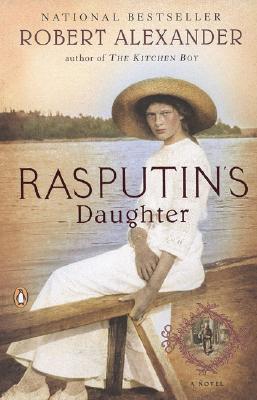
I had read The Kitchen Boy by Robert [Zimmerman] Alexander and had greatly enjoyed it. I thought the writing was wonderful, a breath of fresh air compared to what I had read right beforehand, so when I went to go read Rasputin’s Daughter, my expectations were high. Rasputin’s Daughter is once again a first person narrative of someone involved in the Russian Revolution, although unlike The Kitchen Boy, this was more direct. Obviously, the story is told by Rasputin’s daughter, Maria, as the countdown to Rasputin’s infamous death begins. Maria is incredibly devoted to her father, believing everything that comes out of his mouth and the mouths of the Imperial family. As tension among the people begins to become noticeable and opinions are shared, Maria begins to question and do some digging. Was her father a liar and manipulator of power? Why would he put himself in sexual situations with women knowing that it contradicts what he preaches? Are those healings of Alexei legitimate? Then are all of the personal changes within herself. Young love begins to bloom, but it is also looking to be dangerous as well. What a conundrum.
From the time I started reading Rasputin’s Daughter, I could not put it down; those expectations were met. Once again, Alexander put out such beautiful writing and was able to convey internal struggle of truth and deceit, genuine love or manipulation, so on and so forth. It was a book when I became emotionally invested and wanted there to be success for Maria, knowing that in reality Rasputin will end up dead.
Oh, Rasputin… What can I say about that portrayal? I can tell you it was a lot better than watching it in The King’s Man, ha-ha. In Rasputin’s Daughter, you get to see him at all angles. You hear what the Reds had to say about him: the liar and con artist. You hear what Empress Alexandra and her best friend say about him: Father, friend, confidant, and healer. You hear what the supporters were saying about him: savior. I could not imagine being in a position where your parent is someone who is put on this pedestal by the reigning family of your country, and you wake up one day beginning to develop your own thoughts and feelings and you begin to see all the cracks in that parent’s pedestal; where you discover that those things that the doubters say actually have validity, however small it may be. It is enough to shake everything you thought you knew. Alexander portrays Rasputin as someone who is realistically all those things that everyone said. He was a complicated person who still remains an enigma to all.
I would read this again. I really do enjoy coming back to historical fiction about the Romanovs, and Robert [Zimmerman] Alexander still continues to be a really enjoyable author that I could read more of. I would recommend reading Rasputin’s Daughter; if you are looking to read it as well, you can find it here.
9/10

 Chofa Times on the Chofa