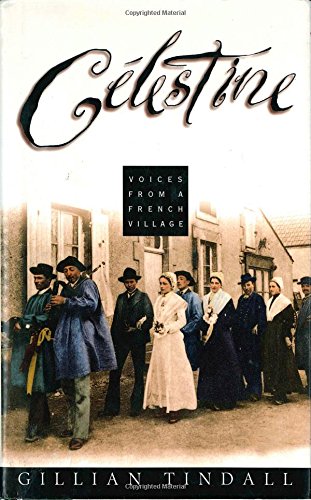
I was able to finish Célestine last night, becoming more interested as I was going.
This is a shorter book, 280 pages if you include the afterward, so it honestly could have been finished way sooner than this, but there would be a few days were I just was not reading anything. I started finding that reading has become a safe haven for me lately, where I know there is peace and quiet, and I do not feel isolated unlike being out doing life.
Célestine is a book by Gillian Tindall that takes a unique turn of historical nonfiction, which, side note, I was a fool and did not see the genre label on the back until I was a third of the way through (social history). This is applied to all of Tindall’s books, according to reviews, so if you read and enjoy this, you would probably enjoy the others. I do not know if this is how other books of the same genre are written, but instead of just spewing out information, she writes it as a sort of process, like what she did to find answer A and how that formulates question B. It sounds more of a narrative, or explanation of process, and that is one way I like to learn. I need to know how one gets from A to B. So because of how Tindall writes, it makes you appreciate and compliment how much work she put in to the research of Célestine’s letters.
With that being said, Tindall does not leave a subject untouched; how a person living in Chassignolles from the late 1700s up until the current time is explained, just so that you have the understanding of what Célestine’s world was like. We have to understand the context of someone in order to really understand the snapshots that is received, which in this case was very well done. You know that this became a personal passion for Tindall, how she connects with those still living around her and the community building she establishes by getting to know her neighbors.
I am amazed at how lately everything I read has in some way been applicable in societal form. To me it reaffirms my stance on generation blaming that has been showing its ugly head for last few years, at least to me it has, maybe it has been continual and only now do I notice it. Every era has its good and bad, and I do not think blaming the generation before me will solve anything because the same thing applied to them. The generation before them left a huge mess that was needed to be cleaned up, and the same goes for now, and the same will go for the future. There will always be a mess; it will not be the exact same mess, but it is still a mess. That is the thing with progress and restructure, and we can only go up from where we are, whether through community effort, or individual growth. This is a huge theme that Tindall establishes in Célestine, and it is something I wish many people would understand.
I got my husband interested in this book, so for now I am keeping it hoping that maybe he will read it. I would recommend this as a good read if you are looking to explore and learn some history and a little piece of society. This is definitely a book of discussion as well I would think. If you are interested in pursuing Célestine, I would start here.
10/10

 Chofa Times on the Chofa