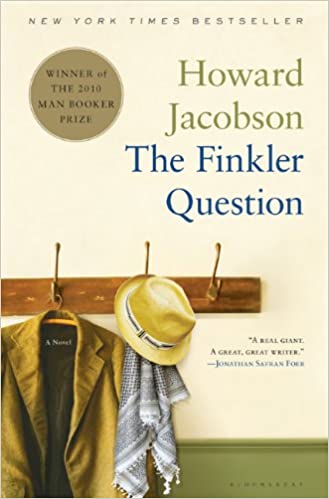
I was able to finish this right when I started going on vacation this past week, and overall I am somewhere in the middle about it.
Julian Treslove, Sam Finkler, and Libor Sevcik are three long-time friends; Julian and Sam were grade school friends and Libor was a teacher of theirs, meanwhile Libor and Sam are of Jewish decent, which becomes the main theme of this book. *Spoilers* It begins with Julian being mugged by a woman who had said “You Ju”, which for the overthinking Julian means that she is calling out his identity. So begins an elongated identity crisis where he becomes seemingly obsessed with everything Jewish: the culture, a little of the religion, and of course the issue of the constant war over land in Israel against the Palestinians.
The theme of identity, especially geared toward Judaism, is something different, so it was interesting to be able to read three different points of view on the topics within their culture. You have one who is young, freshly widowed, and not ashamed of Judaism itself, but how the Jewish people are behaving with the Israeli conflict; one who has been through it all, also freshly widowed, and has begun to accept that good comes with the bad, even if the bad feels like their people are getting their comeuppance; and the last who in my view is in denial that he is just simply on a level of depression and just wants to fit in somewhere, so he finds a way in by dating someone Jewish and having Jewish friends.
This is such a relatable thing to talk about because you can see this in so many other cultures, be it religious, or not. I see it within Christian culture and the various views people have on certain interpretations and how we have behaved toward others not like us. It is the same thing. It is basic human behavior. So I would get frustrated while reading The Finkler Question because although it may be written wonderfully, the constant stopping so that we can talk about Judaism because Julian is obsessed with it to not feel left out when he knows he is being left out gets drawn out longer than it should. I think, though, that it is wonderful for its frustration, its sociological observation, and its clever way of being honest on different angles. People feel differently about things in their culture, and more importantly want to move along and end the negative qualities that their culture dishes out.
I would recommend reading this. I probably would read this again to stimulate conversations on this topic because this is such a common thing to talk about and should be talked about, but in a mature sense, though. If you are interested in reading The Finkler Question, you can find it here.
8/10

 Chofa Times on the Chofa